

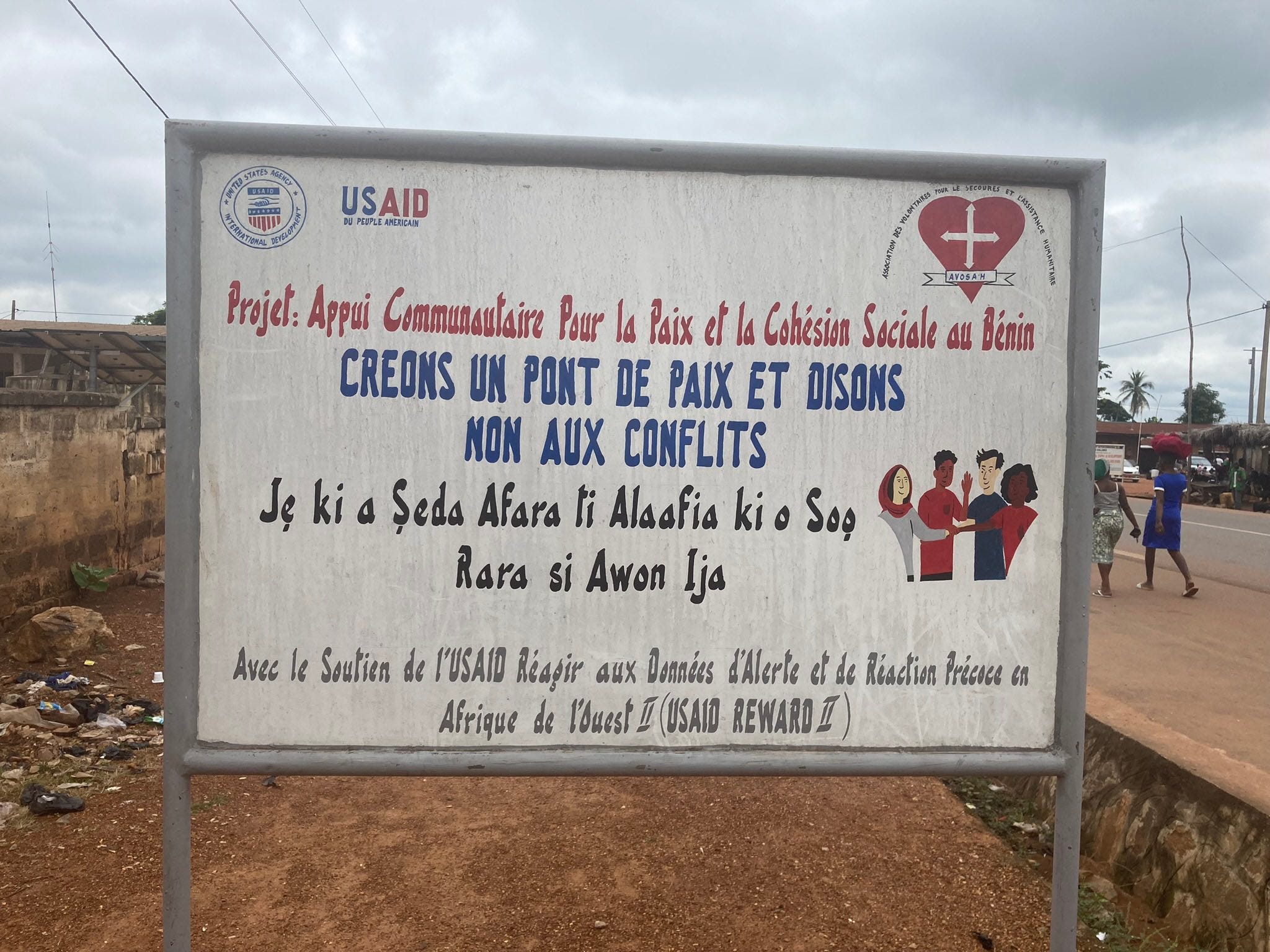
Within two weeks, USAID has gone from the world’s largest bilateral aid agency to an agency that functionally can’t work.
Here’s what happened: On President Trump’s first day in office, he issued an executive order pausing foreign assistance for 90 days while each program is reviewed. A few days later, the State Department issued a stop-work order on nearly all existing foreign assistance. On January 28, Secretary of State Marco Rubio issued a waiver for “life-saving humanitarian assistance,” and a few days later a limited waiver was specifically issued for PEPFAR, the United States’ wildly successful program combatting HIV/AIDS. I’m leaving out the details for brevity, but I should stress how unbelievably disruptive it has been for ongoing programs around the world—often in extremely challenging circumstances—to have to suddenly stop planned work on the basis of constantly evolving instructions that have lacked guidance on the most basic issues that programs are facing.
The attacks on USAID have escalated even further in recent days. USAID’s website was taken down and its headquarters were closed, and reports emerged that USAID would be folded into the State Department. Yesterday, Secretary Rubio said he was “Acting Administrator” of USAID and notified Congress of a “review and potential reorganization” of USAID. Elon Musk and the “Department of Government Efficiency” have also been heavily involved. Musk put out a series of vile and false tweets about USAID, and people associated with the task force have led on the suspension or firing of hundreds of career officials and contactors, including two security officials who sought to prevent members of the task force from entering a secure area with classified material.
As this all unfolds, one question I keep hearing is, “Isn’t this illegal?” The answer to that question is yes.
Why Am *I* Writing This?
There are tons of conversations happening about the assault on USAID, and there are thousands of people and organizations affected by the Trump administration’s illegal actions. Unfortunately, the vast majority of these conversations are happening in private, and lawsuits have been slow to materialize. This silence is a problem: it hampers public mobilization in defense of USAID, it limits understanding of how USAID is being used as a test case for dismantling other agencies, and it means that those with standing to bring a lawsuit might not know they can. This dynamic is also understandable: USAID employees and organizations that receive funding from USAID are at the center of all this, but they are terrified of potential repercussions if they are seen pushing back on the administration.
Fortunately, I don’t face those constraints. I had already been thinking of starting a Substack in my personal capacity, and I decided to channel my doomscrolling into something productive (and, if you like this post, please subscribe!). I did graduate from Yale Law School in 2022, and I am licensed to practice law in DC. That said, I should stress that I have worked on development policy since graduating, rather than practicing law, and I don’t have special expertise in the areas of law covered below. (I had to look back at my outlines from law school while writing this.) Most of what I’m doing in this post is compiling the information I’ve read from people with more expertise (like the Lawfare Live session below), and needless to say, this is not legal advice.
Think of this post as a starter pack rather than the final word. If I’ve gotten anything wrong, let me know and I’ll add updates. And remember that the news is moving extremely fast—I’ll try my best to track new developments on my Twitter and BlueSky.
Why is the assault on USAID illegal?
I have heard of four general buckets of legal issues at play with USAID, and I cover them below. While one or more of these buckets would provide the basis for any lawsuit, not just anyone can bring one. The plaintiff would need to have standing, which roughly means that they were harmed by the actions of the person or entity they are suing and the court could fix it. Different actors will have standing for different types of claims raised below.
Merging USAID with State
USAID was created by an act of Congress, so only an act of Congress can dissolve it. Some opponents of USAID have pointed out that USAID was created by an executive order in 1961. But while it was created by an executive order, Congress has since established USAID as an agency, through the Foreign Affairs Reform and Restructuring Act of 1998. That Act gave the president a 60-day window in which he could have abolished USAID and transferred its functions to the State Department, but President Clinton kept USAID as an independent agency, and that 60-day window has long passed. So, the 1998 Act is congressional authority that makes USAID an agency separate from the State Department, and the executive branch can’t override it. I highly recommend Tess Bridgeman’s Just Security piece on this issue, and the Congressional Research Service also put out a report clearly stating that “congressional authorization would be required to abolish, move, or consolidate USAID.”
I would guess there will be a legal fight about how much of USAID’s functions the administration can move to the State Department. When Secretary Rubio wrote to Congress yesterday, he cited Section 7603 of the most recent appropriations act, which requires congressional consultation and notification for structural changes to USAID. And while the letter is clear that Rubio plans to gut USAID, it is ambiguous about whether he thinks an act of Congress would be required to formally eliminate it. Prior administrations, including the first Trump administration, have used provisions like the one Rubio cited to reorganize USAID. But as the Congressional Research Service writes, “in the past, Administrations have implemented such changes only after this notification.” Not only did the Trump administration’s flurry of changes at USAID take place before notifying and consulting with Congress, its changes that imply the abolition of USAID—like taking down USAID’s website and removing its sign from headquarters—are on a totally different scale to past changes. (Another nugget in Rubio’s letter: confirmation that he has delegated his authority over USAID to Peter Marocco, who is documented to have been in the capitol on January 6th.)
One challenge for this type of lawsuit is going to be standing. Individual members of Congress would not have standing to sue. While USAID employees and contractors are being harmed by the administration’s actions, they will have to convince a court that it was the merger of USAID and the State Department—not another action—that caused the harm to them.
Administrative Procedures Act and impoundment
You may have seen coverage of a major lawsuit about the Trump administration’s funding freeze and thought it applied to USAID. Unfortunately, that’s not the case. On January 27, a week after the executive order freezing foreign assistance, the Office of Management and Budget (OMB) issued a memo freezing all federal financial assistance. The memo prompted mass confusion about what it covered and whether the Trump administration had rescinded it, and a judge on the Federal District Court of the District of Columbia has granted a temporary restraining order (good news, but to be clear, not an ultimate legal victory).
The foreign assistance funding freeze derives from a different set of Trump administration actions than the OMB memo, and it is generally understood that the temporary restraining order in the OMB case doesn’t apply to foreign assistance. However, the arguments that have succeeded in countering the OMB memo could very easily be applied to the foreign aid freeze.
The Administrative Procedures Act forbids agency actions that are “arbitrary, capricious, an abuse of discretion, or otherwise not in accordance with law.” Judge Loren AliKhan of the DC District Court writes that “Defendants have offered no rational explanation for why they needed to freeze all federal financial assistance— with less than twenty-four-hours’ notice—to ‘safeguard valuable taxpayer resources.’” Surely that argument holds for the indiscriminate and overnight foreign aid freeze. Judge AliKhan also notes that OMB acted “seemingly without any consideration for the consequences of that decision” and ignored the ways grantees relied on the funding—ditto for foreign aid.
In finding that the “plaintiffs have shown that they are likely to succeed on the merits of their arbitrary and capricious claim,” Judge AliKhan also notes impoundment concerns. Under the Constitution, Congress has the power of the purse, not the executive. Congress has the power to set budgets, and Congress appropriated all the funds affected by the Trump administration’s actions. If the President refuses to spend funds that Congress has appropriated, this is called “impoundment.” While there is some flexibility for the executive, the Impoundment Control Act sets guardrails. These include notifying Congress, which President Trump hasn’t done, and deferring spending for 45-days following the request, which is less than the 90-day, unprecedented foreign assistance freeze in President Trump’s executive order. The Trump administration’s attempts to claw back appropriated funding have been so broad that they could render Congress’s power of the purse meaningless—what’s the point of setting a budget if the executive can just refuse to spend it? (Steve Vladeck had a great blog on impoundment in the context of the OMB memo, while Scott Anderson argued it might take some time for impoundment claims to ripen sufficiently for actors to have standing.)
Adva Saldinger of Devex reported yesterday that Robert Nichols of Nichols Liu would be bringing a lawsuit specifically “challenging the foreign aid freeze and stop-work order,” representing an association of NGO workers who have been affected. Nicholas said that the lawsuit would be based on the Administrative Procedure Act and seek a temporary restraining order—much like the lawsuit on the OMB memo.
Contract violations
The two buckets highlighted above deal with constitutional and administrative law, but you would certainly think there are some plain old contract law violations that could be litigated. I’m not going to go deep into the contract law issues, as I haven’t looked at the types of contracts USAID is signing with implementers (oh and also I should have paid more attention in contracts class).
But if you’re an implementing partner for USAID, you should look back through your contracts, and you might start to get interested in things like promissory estoppel and detrimental reliance (and you should get a lawyer). And outside of litigation, I know Olga Wall has been a useful resource for organizations figuring out how to manage the uncertainty.
“Department of Government Efficiency” and employment protections
I’m also going to keep this section brief, but especially given the prominent role the “Department of Government Efficiency” has played in the assault on USAID, it’s worth noting the huge legal questions at play. The “Department of Government Efficiency” is not an actual department. Elon Musk has a host of conflicts of interest, and his legal authority to intervene in this official role is fuzzy. The latter also goes for Gavin Kliger, the 2020 college graduate who sent the email announcing the closure of USAID headquarters. There are also significant doubts about their security clearances. Even leaving aside the question of who has made the decisions about USAID employees, the manner in which many career civil servants and contractors have been put on leave or fired certainly seems to be illegal.
So it’s illegal, but how do we stop it?
The most basic step is that we need lawsuits. The one Robert Nichols is leading is a good step but more is needed. The actors most likely to have standing, with the ability to win rulings with the widest impacts, are implementing partners. I understand why organizations really want to keep getting USAID funding and don’t want to jeopardize that by sticking their neck out, but someone needs to act to get out of the collective action problem that is allowing illegal actions to continue without legal challenges. The longer USAID is ripped apart, the less likely it will be put back together.
An organization that gets some USAID funding but mostly relies on other funding sources will have less to lose and could be a good candidate to serve as a plaintiff. But as the consequences become more and more severe for organizations heavily reliant on USAID funding, even they may take the leap. If I can play a small role in helping facilitating conversations that haven’t been happening, feel free to reach out.
But at the same time, we can’t count on lawsuits to solve everything. They will take too long, their scope may be limited, and they will take place in courts that have been stacked with rightwing judges. Here are three other ways to protect USAID:
1. Block nominees: Senators have huge power to slow the Trump administration’s agenda. The Wall Street Journal reported that Senator Brian Schatz said “he would place a ‘blanket hold’ on all of President Trump’s State Department nominees until the administration’s attack on the leading U.S. foreign-assistance agency ends.” More Senators should join him, and constituents should ask their Senators to do so.
2. Prominent politicians speak up: Congressional Democrats have been more vocal in recent days, with some holding a rally outside USAID headquarters and attempting to enter the building. It’s also very good news that some Republican Senators have been speaking up for USAID, including Senators Cassidy, Moran, and Wicker. (And in 2017, a certain Senator Marco Rubio said, “Foreign Aid is not charity. We must make sure it is well spent, but it is less than 1% of budget & critical to our national security.”) I certainly hope other prominent Republicans who have supported aid throughout their careers, most notably George W. Bush, who started PEPFAR, won’t stand by while their work is torn down.
3. Rally on Wednesday: On Wednesday, February 5 at 11:30 there will be a rally to restore foreign aid at the Upper Senate Park (Constitution & Delaware Ave NE).
And in my opinion, the most effective thing we can do is to highlight the deadly, destructive, and deeply immoral effects the dismantling of USAID would have—and that the stop-work order and funding freeze have already had. Sure, keep up the arguments on geopolitics. Don’t stop saying that foreign aid makes up less than 1% of the federal budget. And someday, when the motivations for reform are coming from the right place, we should talk about the many ways USAID could be improved.
But the main victory that has been won has been the (extremely imperfect) waivers for life-saving humanitarian assistance and some PEPFAR activities. These aren’t the waivers an administration would grant if they had finally been persuaded they needed to counter China or prevent lawsuits. But people made clear that the administration’s actions were killing innocent people, and even in this political climate, that counted for something.
There’s one story that has stuck with me the most about all this. Someone I know told me about a project she had been working on in a country that had recently emerged from a civil war. The war had forced many children out of school, and the project offered lessons to teach the now-teenagers and adults to read. So delighted to be offered this rare opportunity, they would walk over an hour to get there, often having to wade through flooded zones, submerged up to their waists. When the stop-work order came, those trainings stopped, too. We may not be as good as the country they imagine us to be, but we must be better than this.
Other links I found valuable
“People Will Die”: The Trump Administration Said It Lifted Its Ban on Lifesaving Humanitarian Aid. That’s Not True, Brett Murphy and Anna Maria Barry-Jester, ProPublica
Behind the Chaotic Attempt to Freeze Federal Assistance, Atul Gawande, The New Yorker
No, 90 Percent of Aid Is Not Skimmed Off Before Reaching Target Communities, Rachel Bonnifield and Justin Sandefur, Center for Global Development
Ending U.S. foreign aid hurts far more than aid programs, Matthew S. Winters, Good Authority
The Rise and Fall of the Department for International Development, Mark Lowcock and Ranil Dissanayake
For context, in 2020 the UK merged its aid agency into its foreign affairs ministry, like the Trump administration plan, and it is “a move now widely viewed as a mistake.”
Freddy’s take
Thanks for this! I work for a nonprofit USAID IP that implements a mix of humanitarian and development assistance. I can confirm that despite the waiver we have received no funds from the USG to continue life saving work. Even if funds were flowing, our legal department do not seem to believe the waivers are written in a way that we can actually implement without substantial risk.
In fact, the USG hasn't paid us for USAID work done prior to the SWO. Tens of millions of dollars worth of work. We've heard that the Trump admin does not intend to pay any outstanding invoices from before the SWO. This is true for all IPs that I am aware of.
Thanks! Re: contract violations, I've heard that U.S. grants to humanitarian organizations for work outside the US are typically considered financial assistance or donations rather than enforceable contracts. As such, the gov has broad discretion in modifying or terminating funding, even after a commitment has been made. I think the arbitrariness and lack of due process issues remain, but I don't have time to dig into it. Could be an interesting topic for a deeper dive, if you're willing and able to do one!